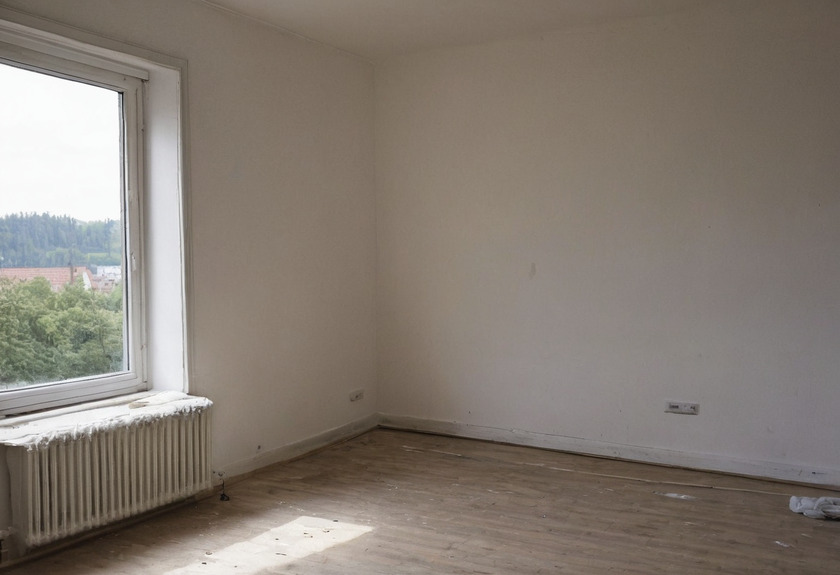
In German tenancy law the landlord maintains the flat, and the duty to paint passes to the tenant only through a valid clause in the lease. The Bundesgerichtshof (BGH, the federal court of justice) has struck out most standard clauses since 2008: rigid deadlines, prescribed colours during the tenancy, quota payments and any clause in a lease for a flat handed over unrenovated. The article sets out the rules, the case numbers and what painting costs in 2026.
Who must paint a rented flat in Germany under the BGB
Under Section 535(1) of the Bürgerliches Gesetzbuch (BGB, the German civil code) the landlord must hand over the flat in a condition suitable for the agreed use and maintain that condition for the whole tenancy, so painting, wallpapering and other cosmetic repairs (Schönheitsreparaturen) are by law the landlord's task and become the tenant's task only through a valid clause in the lease. The text of Section 535 BGB on gesetze-im-internet.de states that the landlord "hat die Mietsache dem Mieter in einem zum vertragsgemäßen Gebrauch geeigneten Zustand zu überlassen und sie während der Mietzeit in diesem Zustand zu erhalten".
Section 538 BGB adds the second pillar: "Veränderungen oder Verschlechterungen der Mietsache, die durch den vertragsgemäßen Gebrauch herbeigeführt werden, hat der Mieter nicht zu vertreten" (changes or deterioration caused by contractual use are not the tenant's responsibility), according to the text of Section 538 BGB. Ordinary wear of paint and wallpaper over years of living is such deterioration.
The term Schönheitsreparaturen has a statutory definition in Section 28(4) of the Second Calculation Ordinance (II. Berechnungsverordnung), which limits cosmetic repairs to wallpapering, painting or whitewashing walls and ceilings, painting floors, radiators and heating pipes, and painting interior doors and the inside of windows and external doors. Sanding and sealing a parquet floor, replacing a carpet or repairing plaster fall outside that list and stay with the landlord even under a valid clause, as the Berliner MieterGemeinschaft explains in its guide to Schönheitsreparaturen.

Which lease clauses the Bundesgerichtshof has declared void
The Bundesgerichtshof has declared void, as unreasonable disadvantages under Section 307(1) and (2) BGB, four families of standard clauses: rigid renovation deadlines that ignore the actual condition (rulings VIII ZR 361/03, VIII ZR 178/05 and VIII ZR 152/05), colour prescriptions that bind the tenant during the tenancy (VIII ZR 224/07 of 18 June 2008), a duty to hand the flat back painted white (VIII ZR 198/10), and quota clauses that charge a share of future painting costs (VIII ZR 242/13 of 18 March 2015). A void clause is not reduced to a valid core; the whole painting obligation falls away and the landlord's statutory duty under Section 535 BGB returns.
The colour ruling of 2008 concerned the clause "Die Schönheitsreparaturen sind in neutralen, deckenden, hellen Farben und Tapeten auszuführen", and the court held in press release 115/2008 of the Bundesgerichtshof that a landlord has a legitimate interest in receiving the flat back in a colour scheme that lets it be re-let, but "kein anerkennenswertes Interesse" in restricting the tenant's choice of colours or non-opaque finishes while the tenancy runs.
| Clause type in a German residential lease | BGH decision | Result |
|---|---|---|
| Rigid schedule ("every 3, 5, 7 years" without regard to condition) | VIII ZR 361/03, 178/05, 152/05 | void |
| Neutral or light colours prescribed during the tenancy | VIII ZR 224/07, 18 June 2008 | void |
| Flat to be returned painted white | VIII ZR 198/10 | void |
| Quota payment for part-used renovation intervals | VIII ZR 242/13, 18 March 2015 | void |
| Transfer of painting duty in a flat handed over unrenovated, no compensation | VIII ZR 185/14, 18 March 2015 | void |
| Flexible schedule ("in der Regel", "normalerweise") in a flat handed over renovated | accepted by the case law | valid |
The Bavarian consumer portal quotes the schedule that most leases copy: "Schönheitsreparaturen werden regelmäßig in Küchen, Bädern und Duschen nach drei Jahren, in Wohn- und Schlafräumen, Fluren und Dielen und Toiletten nach fünf Jahren und in allen anderen Nebenräumen nach sieben Jahren erforderlich", and explains that the schedule is valid only in a flexible form that takes the actual wear into account, according to the page of the Verbraucherportal Bayern on the timing of Schönheitsreparaturen, last updated 16 December 2024. The same page states that a tenant who moves out before the interval has run and whose flat objectively needs no renovation owes no painting at move-out.
What changed in 2015 for flats handed over unrenovated
On 18 March 2015 the eighth civil senate of the Bundesgerichtshof abandoned its earlier case law and ruled in case VIII ZR 185/14 that a standard clause transferring cosmetic repairs to the tenant is void when the flat was handed over unrenovated or in need of renovation and the tenant received no adequate compensation, because the tenant "nur zu den auf seine eigene Vertragszeit entfallenden Renovierungsleistungen verpflichtet werden darf" (may be obliged only to the renovation work attributable to his own tenancy), according to press release 039/2015 of the Bundesgerichtshof.
The same day the court decided VIII ZR 242/13, which declared quota clauses (Quotenabgeltungsklauseln) void because the tenant's share of future costs "nicht verlässlich ermittelt werden kann" (cannot be reliably determined) at the time of signing, and VIII ZR 21/13, where a clause with rigid deadlines freed the tenant from damages. In VIII ZR 185/14 the landlord's claim for damages for omitted cosmetic repairs was dismissed in full.
Two consequences follow for a tenant in Germany. The tenant carries the burden of proving that the flat was unrenovated at handover, as the Berliner MieterGemeinschaft warns: "Sie sind für den Umstand, dass die Wohnung unrenoviert übergeben worden ist, beweispflichtig". A dated handover protocol (Übergabeprotokoll) with photographs of every wall, signed by both parties, is therefore the single most useful document at the start of a German tenancy. And a tenant who took over an unrenovated flat under a void clause may, after years of wear, demand that the landlord repaint, subject to the cost sharing described in the next section.
What the 2020 ruling means for the cost of repainting an unrenovated flat
On 8 July 2020 the Bundesgerichtshof ruled in cases VIII ZR 163/18 and VIII ZR 270/18 that a tenant who received an unrenovated flat under a void clause can demand that the landlord carry out cosmetic repairs once the decoration has deteriorated well beyond the handover state, but must contribute to the cost, "regelmäßig zur Hälfte" (as a rule one half), because the fresh renovation improves the flat beyond the unrenovated condition that was agreed, according to press release 090/2020 of the Bundesgerichtshof.
In VIII ZR 163/18 the tenants had rented an unrenovated Berlin flat in 2002 and after 14 years sued for an advance of €7,312.78 on the painting cost. In VIII ZR 270/18 the tenant had moved into an unrenovated flat in 1992 and demanded painting work in December 2015. The court derived the landlord's duty from Section 535(1) sentence 2 BGB and the cost sharing from the principle of good faith in Section 242 BGB.
| Handover state and clause | During the tenancy | At move-out |
|---|---|---|
| Renovated flat, valid flexible clause | tenant paints when wear requires it | tenant paints rooms whose interval has run and that need it |
| Renovated flat, void clause | landlord paints under Section 535 BGB | tenant returns the flat with normal wear, Section 538 BGB |
| Unrenovated flat, standard clause (void since 2015) | landlord paints when decoration has deteriorated well beyond handover state, tenant pays half | tenant returns the flat with normal wear |
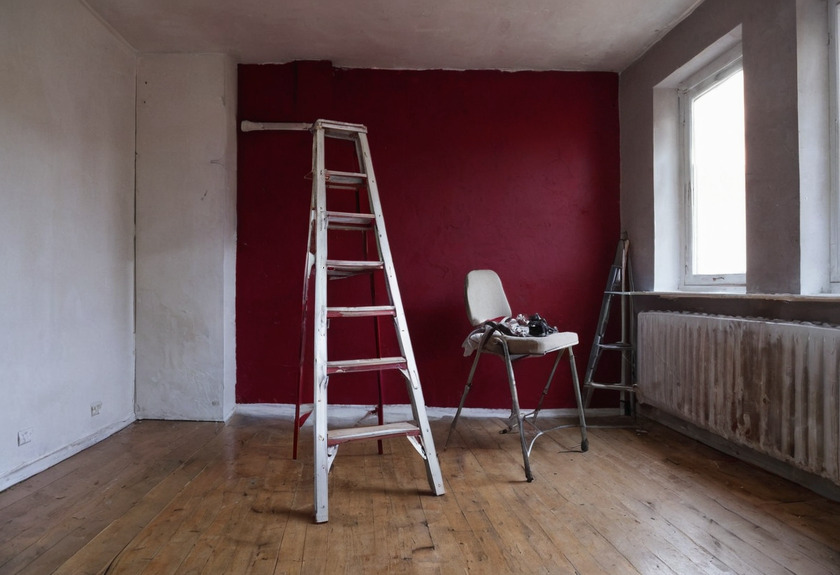
| Any flat, tenant painted in unusual colours | tenant's free choice, VIII ZR 224/07 | tenant owes restoration to a lettable state, VIII ZR 416/12 |
The last row rests on the ruling of 6 November 2013. The tenants had taken over a semi-detached house painted white in 2007, painted single walls red, yellow and blue and returned the house in that state in July 2009; the landlord's repaint cost €3,648.82, and after the deposit was set off the court awarded €874.30, holding that a tenant who returns "eine in neutraler Dekoration übernommene Wohnung bei Mietende in einem ausgefallenen farblichen Zustand" owes damages under Sections 535, 241(2) and 280(1) BGB, according to press release 183/2013 of the Bundesgerichtshof.
What painting costs in Germany in 2026 and how the tax credit reduces it
Professional painting in Germany costs €8 to €15 per square metre of wall or ceiling for basic interior work and €15 to €28 per square metre with high-quality paint in 2026, according to the Aroundhome price guide for painters, with wallpaper removal at €5 to €20 per square metre, filling and smoothing at €12 to €25 per square metre, woodchip wallpapering at €10 to €18 per square metre and designer wallpaper at €22 to €50 per square metre. A journeyman painter is billed at €45 to €70 gross per hour and a master painter at €65 to €90 gross per hour in the same guide.
- Interior door, both sides lacquered: €170 to €250 per door.
- Window, inside face lacquered: €60 to €100 per window.
- Radiator: €40 to €180 per unit.
- Wall and ceiling area of a room: roughly the floor area multiplied by three for a 2.50 m ceiling, so a 20 m² room has about 60 m² to paint.
A landlord who claims damages after move-out must claim within six months: Section 548(1) BGB provides that "Die Ersatzansprüche des Vermieters wegen Veränderungen oder Verschlechterungen der Mietsache verjähren in sechs Monaten", counted from the return of the flat, according to the text of Section 548 BGB. The tenant's own claims for reimbursement of expenses, for example for a repaint the landlord should have paid for, expire six months after the end of the tenancy under the same section.
A tenant or owner who pays a painter can claim the tax credit for craft services (Handwerkerleistungen) under Section 35a(3) of the Income Tax Act (Einkommensteuergesetz, EStG): 20 percent of the labour cost, at most €1,200 per year, provided an invoice exists and the payment was made by bank transfer to the painter's account, according to the text of Section 35a EStG. Materials are excluded. The hourly rates behind those prices, and how they differ between Munich, Berlin and Hamburg, are set out in the article on Handwerker rates and renovation costs.
Painting is the tenant's most common obligation, but changes to floors and fixtures raise separate questions. A tenant who replaces carpet with laminate changes the impact sound value of the floor, which the article on sound insulation under DIN 4109 explains, and a tenant who installs a kitchen in a flat rented without one has to negotiate its sale to the next tenant, which the article on fitted kitchen prices in Germany covers.
Frequently asked questions about renting and tenant rules in Germany
The answers below repeat the figures and legal references from the article in short form, so that each answer can be read on its own.
- Must a tenant in Germany repaint the flat at move-out?
- Only if the lease contains a valid Schönheitsreparaturen clause and the flat was handed over renovated. Under Section 535(1) BGB the landlord maintains the flat, and the BGH ruled on 18 March 2015 (VIII ZR 185/14) that a standard clause is void for a flat handed over unrenovated without compensation.
- May a landlord require white or neutral walls during the tenancy?
- No. The BGH ruled on 18 June 2008 (VIII ZR 224/07) that a clause requiring cosmetic repairs in neutral, opaque, light colours during the tenancy disadvantages the tenant unreasonably under Section 307 BGB and voids the whole painting obligation.
- May a tenant hand back a flat with red, yellow or blue walls?
- No. The BGH ruled on 6 November 2013 (VIII ZR 416/12) that a tenant who received a neutrally decorated flat and returns it in an unusual colour scheme owes damages; in that case the repaint cost 3,648.82 euros and the tenant paid 874.30 euros after the deposit was set off.
- What are the usual painting intervals in a German lease?
- The example schedule quoted by the Bavarian consumer portal is three years for kitchens, bathrooms and showers, five years for living rooms, bedrooms, corridors and toilets and seven years for other rooms, and only a flexible version of that schedule is valid.
- How long can a landlord claim for damage after move-out?
- Six months. Section 548(1) BGB provides that the landlord's compensation claims for changes or deterioration of the flat expire six months after the flat is returned.
- What does professional painting cost in Germany in 2026?
- Aroundhome's 2026 price guide gives 8 to 15 euros per square metre for basic wall and ceiling painting, 15 to 28 euros with high-quality paint, 170 to 250 euros per interior door and 45 to 70 euros gross per hour for a journeyman painter.